Golgappa geometry: the physics of the perfect puri
Thin enough to shatter, strong enough to hold, round enough to fill in one motion. The street's most demanding engineering, explained by its masters.
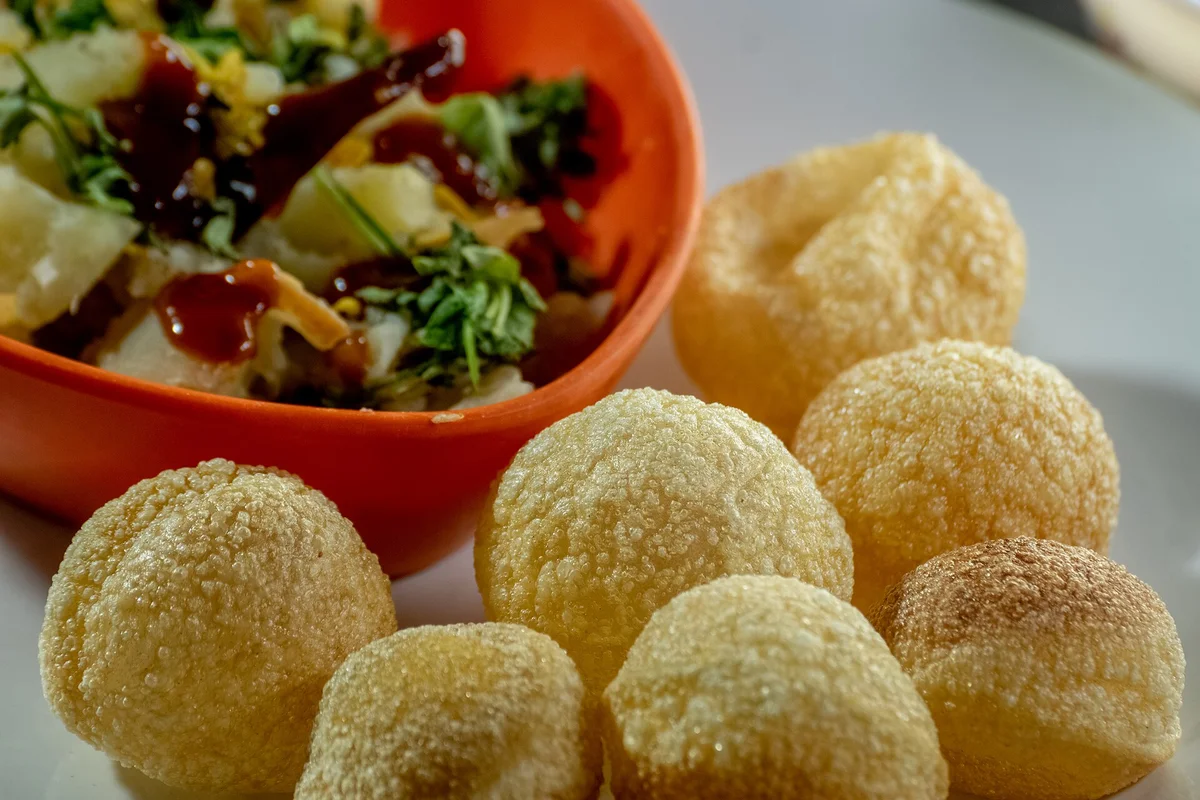
The puri is a pressure vessel with a shelf life of four seconds. It must survive filling, transfer and the journey to the mouth, then fail instantly and completely on bite. Vendors describe the ideal fracture with the vocabulary of glassmakers: clean, total, no soggy survivors.
Achieving it is dough science. Semolina ratios decide crispness; resting time decides puff; frying temperature decides whether a batch balloons hollow or dies flat. Every master has a tell for perfect oil — a test drop, a sound, one vendor swears by the smell alone and has the queue to prove it.
The water is the soul and the trade secret. Base recipes are public — mint, tamarind, spices — but proportions are guarded like family gold. Regulars order by water personality: teekha stalls with a following of masochists, khatta-meetha stalls beloved of children and diplomats.
The serving rhythm is the final engineering: one puri per customer per round, the whole circle served before anyone gets a second, pace calibrated so nobody waits soggy. It is, a vendor of thirty years insists, a hospitality algorithm older than the word: 'Everyone eats hot. Everyone eats together. That is the whole shop.'
Reader Comments
Comments are reviewed by our desk before they appear. Sign in with your mobile number to join the discussion.