Colour chemistry: what's actually in your gulal
Cornstarch and food dye, or something harsher? How to read a colour packet, and why the herbal label earns its premium.
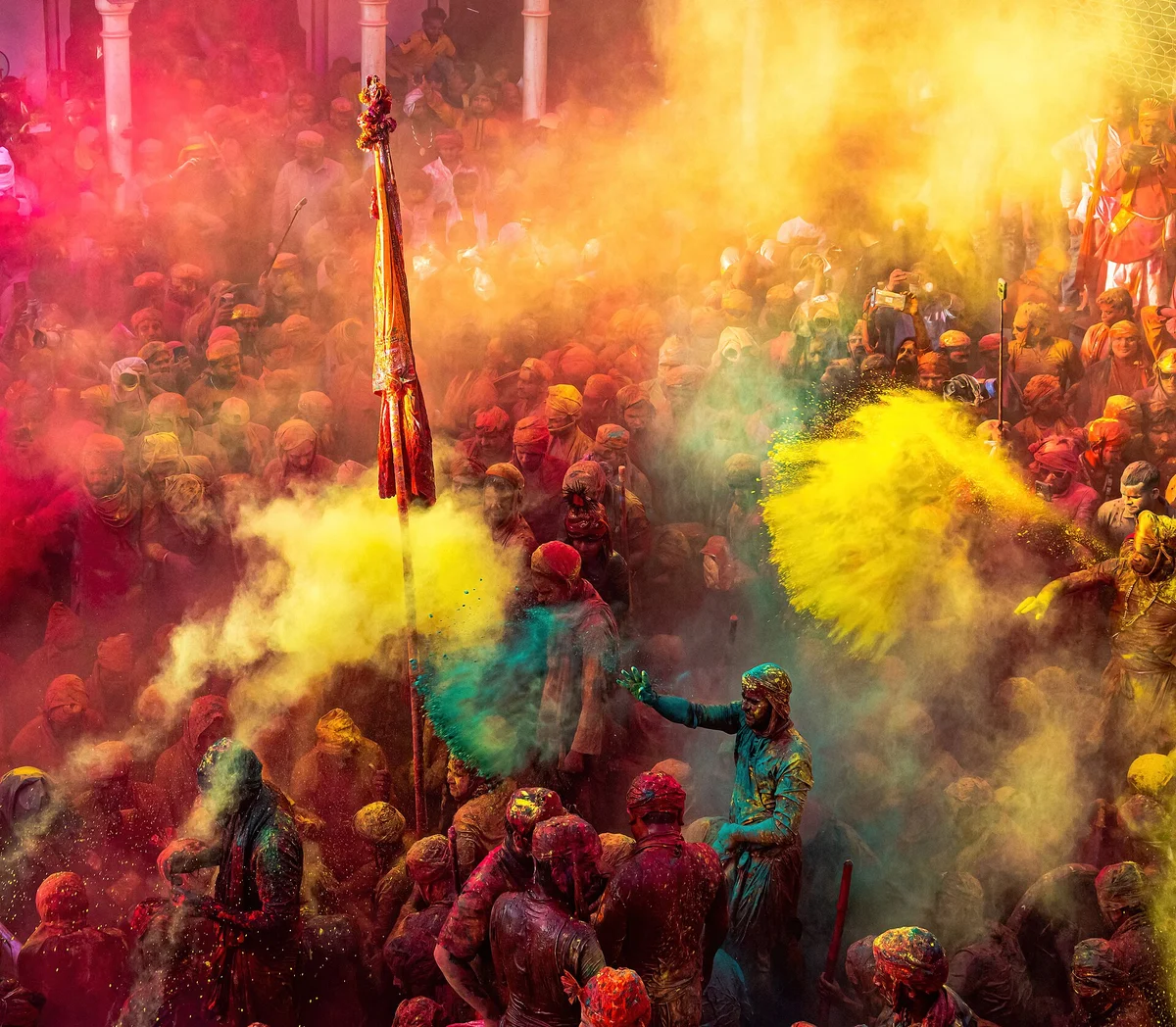
- Herbal gulal lists ingredients; suspect packets list adjectives
- Oil skin and hair before playing
- Too-cheap colour is cheap for a reason
The festival colour market splits into three tiers, and the packet rarely confesses which one it belongs to. At the top, herbal gulal made from cornstarch or arrowroot with food-grade dyes; in the middle, standard synthetic colours that mostly behave; at the bottom, industrial pigments that have no business touching skin.
Reading the packet is a defensive skill. A legitimate herbal product lists ingredients and a manufacturer with an address; a suspect one lists adjectives. Price is a signal too — dye and starch cost real money, and a rate that seems too generous usually is.
Dermatologists offer the standard drill: oil skin and hair beforehand, favour colours that brush off dry, rinse with plain water first. Metallic pastes and anything that stains fabric permanently should be assumed to stain people the same way.
The traditionalists' option is enjoying a revival: colours made at home from flower petals, beetroot and turmeric, the way the festival began. The shade card is narrower, practitioners admit. So is the list of regrets.


Reader Comments
Comments are reviewed by our desk before they appear. Sign in with your mobile number to join the discussion.